Forced evictions: The human impact, the struggle for rights and collective resistance
As part of the collective #StopForcedEvictions campaign, HIC and partner organisations are sharing stories of forced evictions, their impact on people’s lives and the collective struggles to prevent them and demand justice and remedy.
What happened?
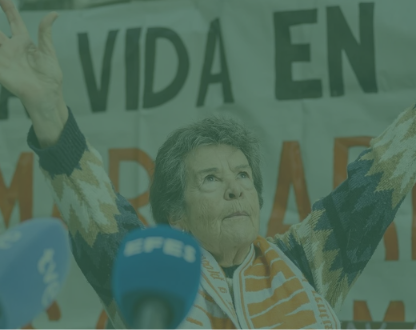
On 8 September 2026, families living in El Jardín, a neighbourhood in Manrique, Medellín, Colombia, were evicted from their homes during an operation described by the local government as a “humanitarian evacuation”.
The intervention followed warnings about flooding risks associated with the La Mansión and La Máquina streams, raised as early as April 2026. However, the operation involved a heavy police presence and the use of force to remove families from their homes. Many houses were subsequently demolished, while residents demanded dialogue and guarantees for their relocation.
For families who had built their homes and lives in El Jardín, the eviction brought uncertainty about where they could live and how they would rebuild their lives.
The drivers and impact
The local government justified the intervention as necessary to protect lives from environmental risks. Yet protecting people from danger must also mean protecting their housing rights.
El Jardín is part of Medellín’s hillside neighbourhoods, where generations of residents have built homes, livelihoods and community networks through self-management and collective organisation.
Displacement threatens much more than housing: it disrupts livelihoods, care networks, access to schools and employment, and the ties that connect families to their communities.
Residents were offered a temporary rental subsidy, but the amount was insufficient to rent a home in the same neighbourhood or elsewhere in the city. Without an adequate and lasting housing solution, families risk being moved from physical danger into economic insecurity, facing higher housing costs, possible debt and further housing instability.
The case reflects wider inequalities in Medellín, where limited access to affordable housing and insufficient investment in neighbourhood upgrading and risk prevention leave many families with few alternatives.
Legal protection and remedy
An eviction may be authorised under national law and still constitute a forced eviction if it fails to meet international human rights standards.
While authorities have a responsibility to protect lives from environmental hazards, they must explore feasible alternatives to eviction, ensure meaningful community participation, provide appropriate safeguards and guarantee access to effective remedy.
Medellín already has a Public Policy for the Protection of Residents (Política Pública de Protección a Moradores), regulated by Decree 0818 of 2021, which aims to protect the rights of people affected by urban interventions. It establishes that resettlement should be a last resort, prioritising measures that allow families to remain in their neighbourhoods or be relocated nearby, where conditions permit, while protecting their livelihoods and community networks.
When relocation is unavoidable, temporary rental assistance must be accompanied by adequate and lasting housing solutions. Residents have demanded dialogue and relocation guarantees, while social organisations have called for the full implementation of existing protections.
Why this story matters
El Jardín’s story highlights a critical challenge for cities facing environmental risks and housing inequalities: protecting people from danger must not mean exposing them to displacement, poverty and the loss of their communities.
Risk prevention requires public investment, neighbourhood upgrading and meaningful community participation. When relocation is genuinely unavoidable, families must have access to adequate housing solutions that protect their livelihoods and social networks.
Eviction is not protection. Protecting lives also means protecting homes, livelihoods, and communities.
No one should lose their home. Prevent forced evictions. Ensure remedy for all.
As part of our collective #StopForcedEvictions campaign, we invite Members, partners and communities to share their experiences, struggles and collective solutions.
Case based on information published by Corporación Región.
- Read the original article: “Desalojar no es proteger: lo que la situación de Manrique exige al POT” – Región
- Share your story: https://docs.google.com/forms/d/e/1FAIpQLSeP0T6tt5B8KISSr38RplowGcMJ2altId2-n_3TCbFfeVOm2A/viewform
#StopForcedEvictions #UrbanOctober #PreventionRemedyJustice
Other testimonies



El Jardín, Medellín, Colombia
Forced evictions: The human impact, the struggle for rights and collective resistance
Explore the campaign
Visit the campaign website to discover more testimonies, learn about collective struggles and explore actions to prevent forced evictions and ensure remedy and justice.