Main Theme / Objective
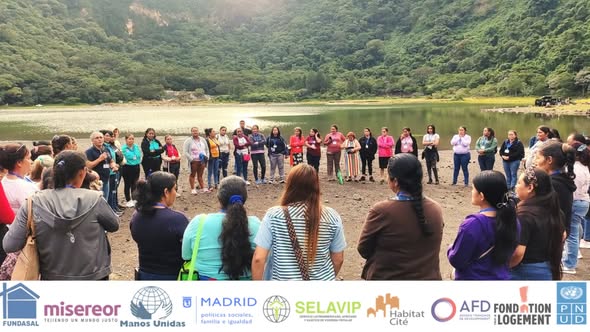
This practice documents the First National Meeting of Women Builders, organized by FUNDASAL in September 2022, to highlight women’s contributions to the social construction of habitat in urban and rural informal settlements. Its central objective is to analyze how their lives are transformed by participating in construction processes (a task typically performed by men), to identify obstacles in their work linked to patriarchy and inequality, and to document lessons learned, skills acquired, and changes in autonomy, organization, and gender equity.
Beneficiary Groups
The practice of involving women from informal settlements in processes of construction and habitat improvement allows them to develop technical skills, strengthen their autonomy, recognize their contribution to the community, and expand their support networks. It also indirectly benefits their families, future generations, and entire communities by improving housing, services, and social organization, thereby contributing to gender justice and the right to adequate housing.
Location (Community / City)
Country
Participating Population
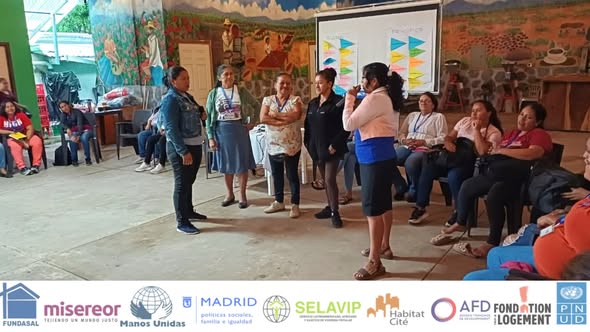
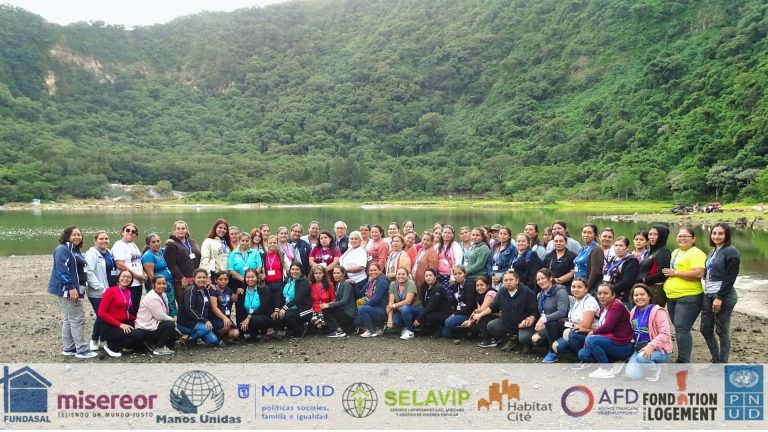
A total of 83 women and 22 men from informal settlements participated in the First Meeting of Women Builders. The primary beneficiaries are women builders, many of whom are single mothers, older adults, young people, and community leaders from urban and rural areas.
Practice Description
Brief quantitative and qualitative description
The process involved 83 women and 22 men, residents of urban and rural neighborhoods, many of whom live in poverty, have experienced displacement or violence, or are single mothers. Most are women who serve as caregivers, farmers, leaders, and survivors of structural inequality. The group includes young women, adult women, and older women, organized into committees, brigades, and cooperatives. Rural women who are promoting agroecological initiatives also participated, as well as populations affected by housing insecurity, stigmatization, and care burdens.
Habitat & Human Rights Relevance
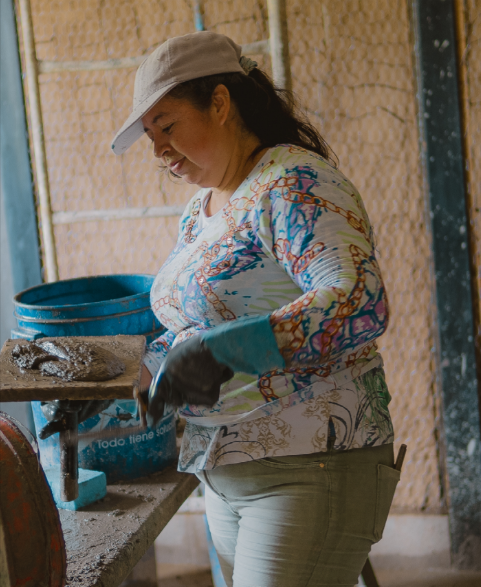
This practice is key because it recognizes women’s contributions to the right to adequate housing and to community-based habitat management. It promotes gender equity, democratic participation, and environmental sustainability, challenging patriarchal structures that exclude women from the construction sector and decision-making processes.
HIC Thematic Areas Related to This Practice
How this practice relate to HIC thematic areas?
This practice relates to HIC’s thematic networks: the Women and Habitat Network, the Housing and Land Rights Network (HLRN), and the Habitat and Sustainable Environment Network (HSEN).
Context & approach: what challenge did it address and how?
The context involves women living in poverty, burdened by care work, and excluded from productive labor due to patriarchal stereotypes. The main challenge was to break down the gendered division of labor, strengthen their autonomy, and ensure their participation in habitat construction. FUNDASAL addressed this challenge through technical and organizational training, collective analysis, mutual aid, community support, spaces for emotional support, and institutional coordination. The initiative promoted gender equity and the creation of solidarity networks that enabled women to develop their capacities, lead construction projects, and transform their communities.
Key Outcomes & lessons Learned
Women builders strengthened their autonomy, as well as their construction and leadership skills. They learned to organize, advocate, and manage projects. It became evident that women’s participation transforms communities, breaks down stereotypes, and builds resilience. Collaboration, mutual aid, and sisterhood were identified as essential for sustaining women-led processes of social production of housing.
Shared Values & Collective Action Across the Coalition
Connection to HIC Values & History
- Values: Solidarity and networks, social and gender justice, environmental sustainability, and human rights.
- Struggles: Right to the City, social production of habitat, climate justice.
Contribution to Future Habitat Challenges
FUNDASAL organized a Second Gathering of Women Builders in 2025 in Usulután. It was a space that strengthened the organizational, technical, and self-care capacities of women from diverse communities. During the event, the National Network of Women Builders was established; participants reflected on cultural practices and sexist behaviors; and there were team-building activities, self-care sessions, and a day of solidarity focused on community-based construction practices. Collective learning and action continue.
Legacy & Future Vision
This practice leaves behind a legacy of a growing network of empowered women builders with technical skills and community leadership. It aims to move toward the consolidation of territorial networks, greater political advocacy, shared responsibility for care work, and the expansion of technical training. FUNDASAL envisions strengthening the social production of habitat, deepening gender equity, promoting new masculinities, and ensuring that women play a central role in the struggle for the right to housing and a sustainable territory.
Link to Global Processes
Media & Resources
Testimonial / Quote
“We women have twice or three times as many tasks, but participating in these projects has made us stronger; we’ve learned, and now we’re better organized. The easiest way out for them [the men] is to leave and leave the woman with all the responsibility. And what happens to us? We can’t run away—we give it our all to move forward.”
Testimony from a Salvadoran woman builder
Message to Younger Generation
The First Gathering of Women Builders teaches that transforming the built environment begins with recognizing one’s own power and that of the collective. The women demonstrated that, even in contexts of poverty, violence, and inequality, it is possible to break stereotypes, learn new skills, support one another, and build adequate living spaces. For future generations: social justice and the right to a better life are built through solidarity, shared knowledge, the courage to challenge the system, and a commitment to the community.