New High-level Commission on the Legal Empowerment of the Poor
A top down process “on behalf of the poor” where the poor are excluded.
Madeline Albright and Hernando de Soto as co-chairs. !!
Looking for Good Projects : 2005-2006
SELAVIP is a private foundation that supports housing projects for very poor families who lack a shelter. Our focus is on “extreme social emergency”, that is, people who dwell in very precarious and unsafe conditions, on lands easily flooded, on steep and dangerous slopes. Each year in August, SELVIUP analyzes projects that NGOs and CBOs send from all over the world. Those projects that comply with our central focus are presented to the SELAVIP Board Meeting in November, to select those that will be financed in 2005.
UN experts deplore Zimbabwe’s campaign of forced eviction
The following statement was issued on June 24, 2005 by a group of ten UN experts
UN Special Rapporteur on Adequate Housing to Visit Iran
Mr. Kothari on mission to Iran from 19-30 July 2005 will receive testimonies and inputs from civil society.
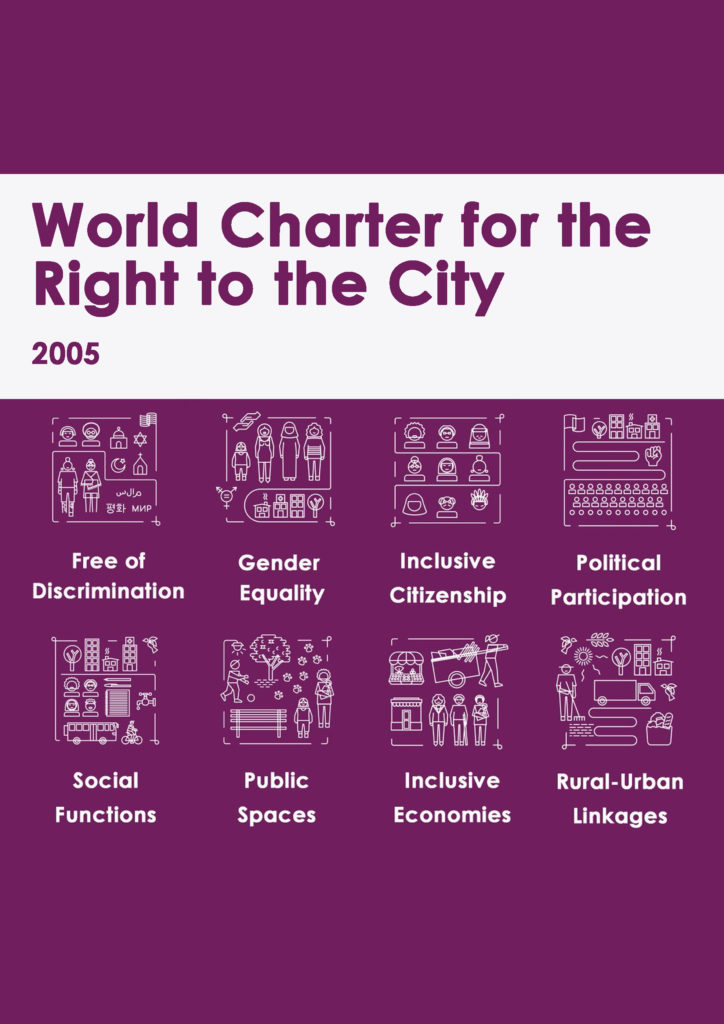
World Charter for the Right to the City
NULL
Zimbabwe evictions: joint statement
A joint NGO statement on the Zimbabwe evictions was launched today at press conferences in four African cities: Harare, Johannesburg, Lagos and Windhoek. The statement was signed by 212 African and International NGOs and it calls upon the United Nations and the African Union to take effective action to prevent and redress the mass forced evictions in Zimbabwe. The call has been widely picked up by mainstream media.
U.N. Hosts Historic Session With Civil Society
UNITED NATIONS – For the first time ever, civil society has been invited to participate in interactive sessions of the U.N. General Assembly, but the guest list has irked some leading activists who wonder why they were not asked to attend.
Zimbabwe: Unprecedented call for UN and AU action over evictions by 200 rights groups
As the human rights situation in Zimbabwe steadily deteriorates, with more than 300,000 now evicted from their homes by the government and a UN Special Envoy appointed to investigate the destruction and evictions, a coalition of more than 200 African and international NGOs today issued an unprecedented Joint Appeal to the United Nations (UN) and African Union (AU) to help the people of Zimbabwe.
Demolished: Forced Evictions And The Tenants’ Rights Movement In China
Demolition and eviction has several decades of history in China. In the past, ordinary people longed for demolition and eviction [because they were moved to better homes], but now ordinary people fear demolition and eviction, they hate [it], and even use death and suicide to oppose [it].. This hatred, this opposition to demolition andeviction has really only appeared in the last few years. – Tenants’ rights advocate Xu Yonghai,
Challenges and Opportunities of Rural Women in China
Rural women make up 65.6% or more of the farm laborers as many men have left the rural areas and farm work. In China, like in so many other countries, rural women are never helpless victims. Since they have to survive in a physically, socially, legally and culturally hostile environment throughout their lives, they have developed particular strengths, determination and courage.
Policy-relevant reflections on Social Production of Habitat: Asking the Right Questions
Social change arises from politics, not philosophy. Ideals are a crucial step in emancipatory politics, however, because they dislodge our assumption that was is given is necessary. They offer the standpoints from which to criticize the given, and inspiration for imagining alternatives.
Women’s ownership of land, housing and productive resources as an indicator of poverty reduction in the Millennium Development Goals
Five of the eight MDGs clearly require the implementation of policies that promote women’s land and livelihood rights. The Consult on Women and Land Rights proposes concrete actions to reduce gender inequality and poverty by increasing women’s ownership on land and productive assets.