Thème principal / objectif
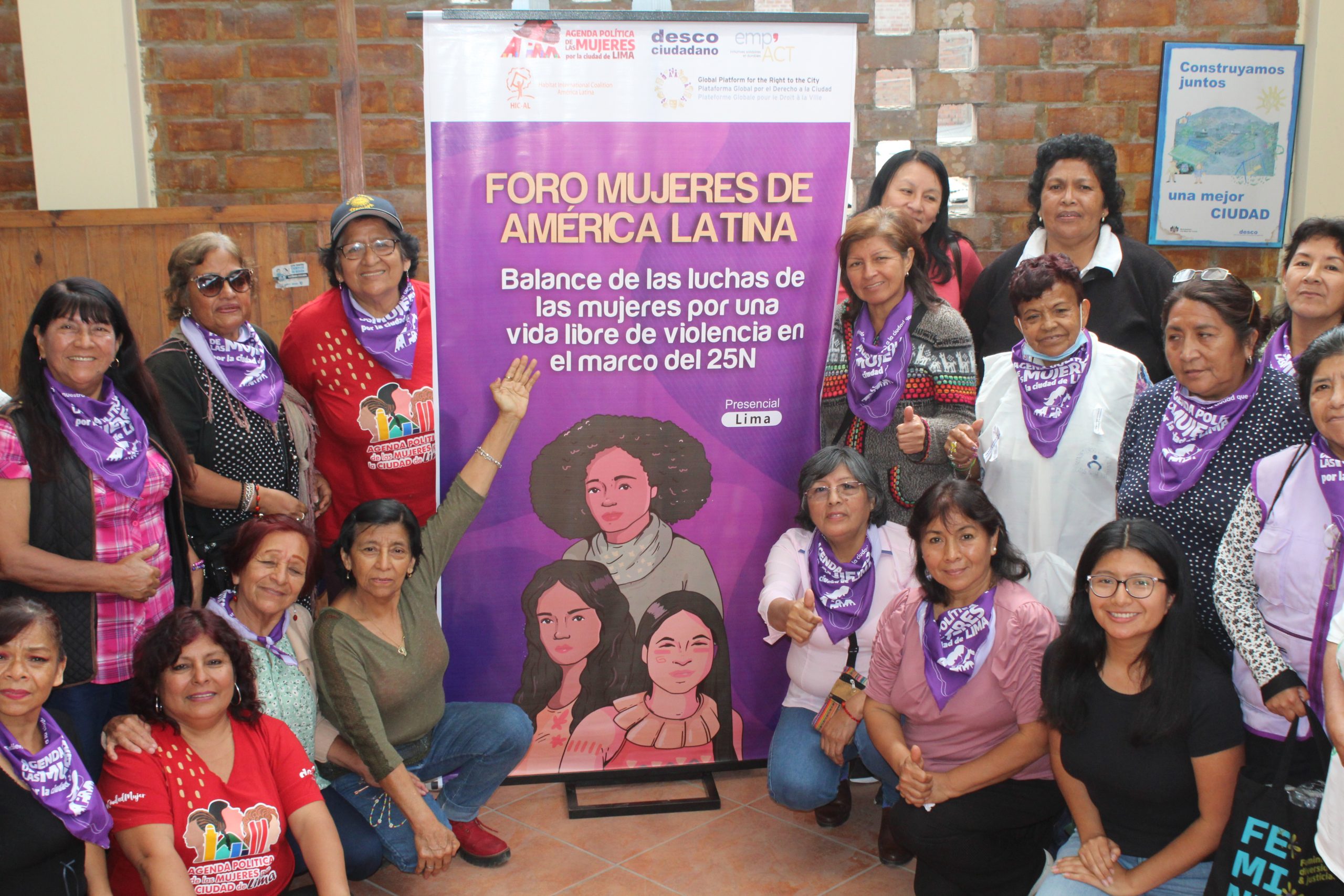
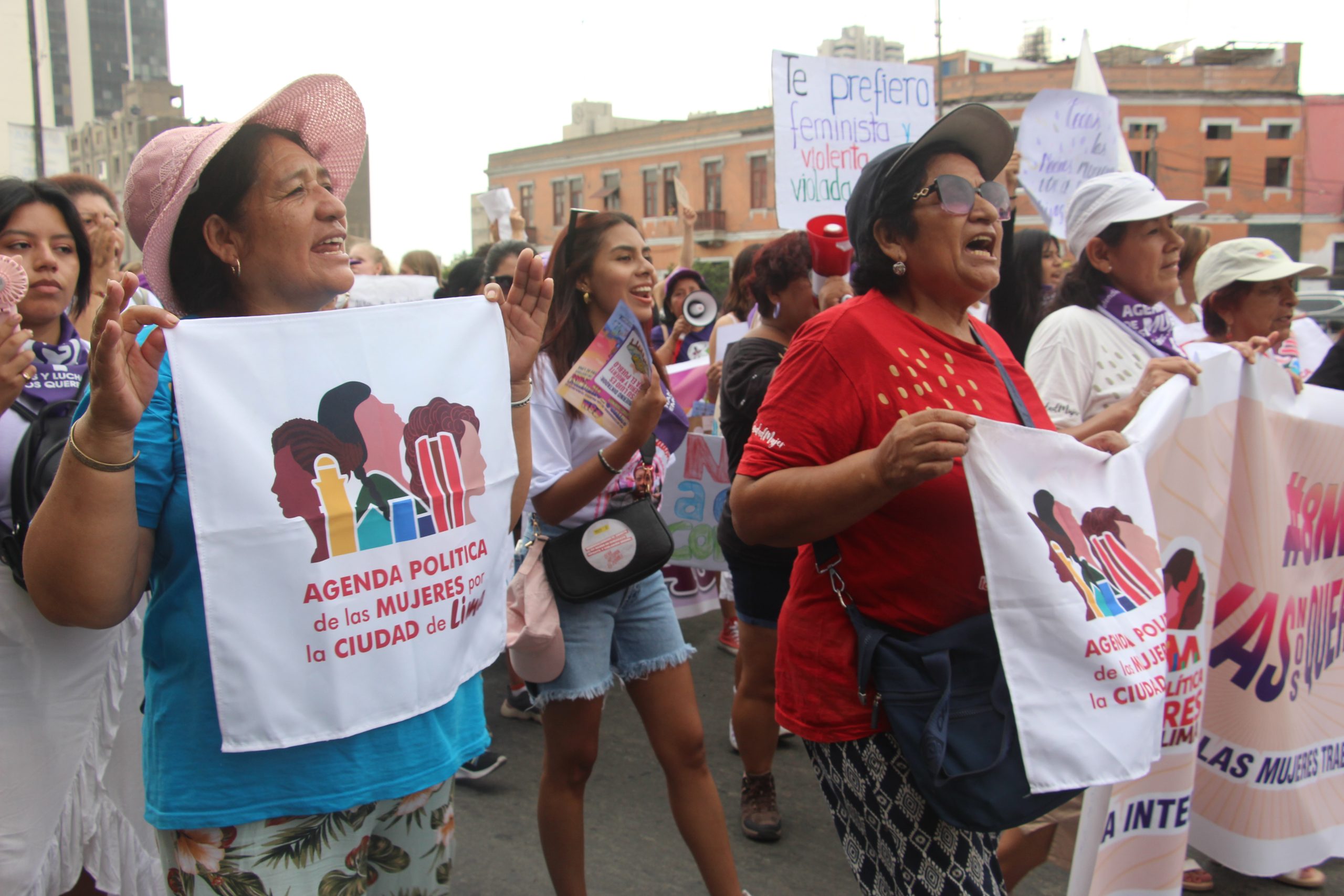
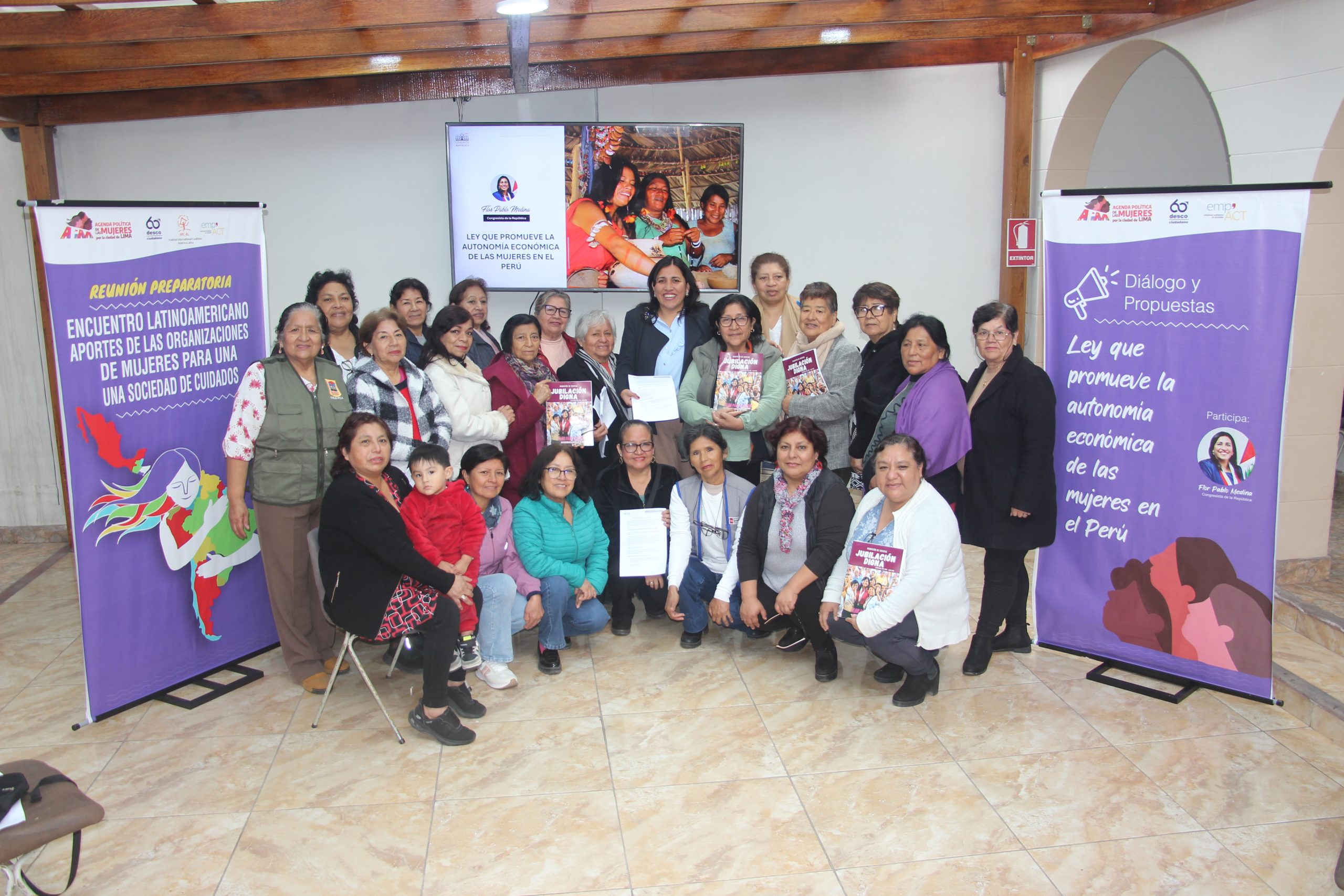
The objective of the Women’s Political Agenda is to serve as a foundational tool for fostering collaboration between Lima’s social organizations and public or private institutions operating in the city: local government, nongovernmental organizations, political parties, and/or grassroots social organizations, in order to achieve participatory processes that ensure women’s voices are heard and their participation in the city’s decision-making. The focus areas are: health, political participation, labor, urban development/environment, public safety and violence against women, and education, culture, and ethnic/racial discrimination.
Groupes bénéficiaires
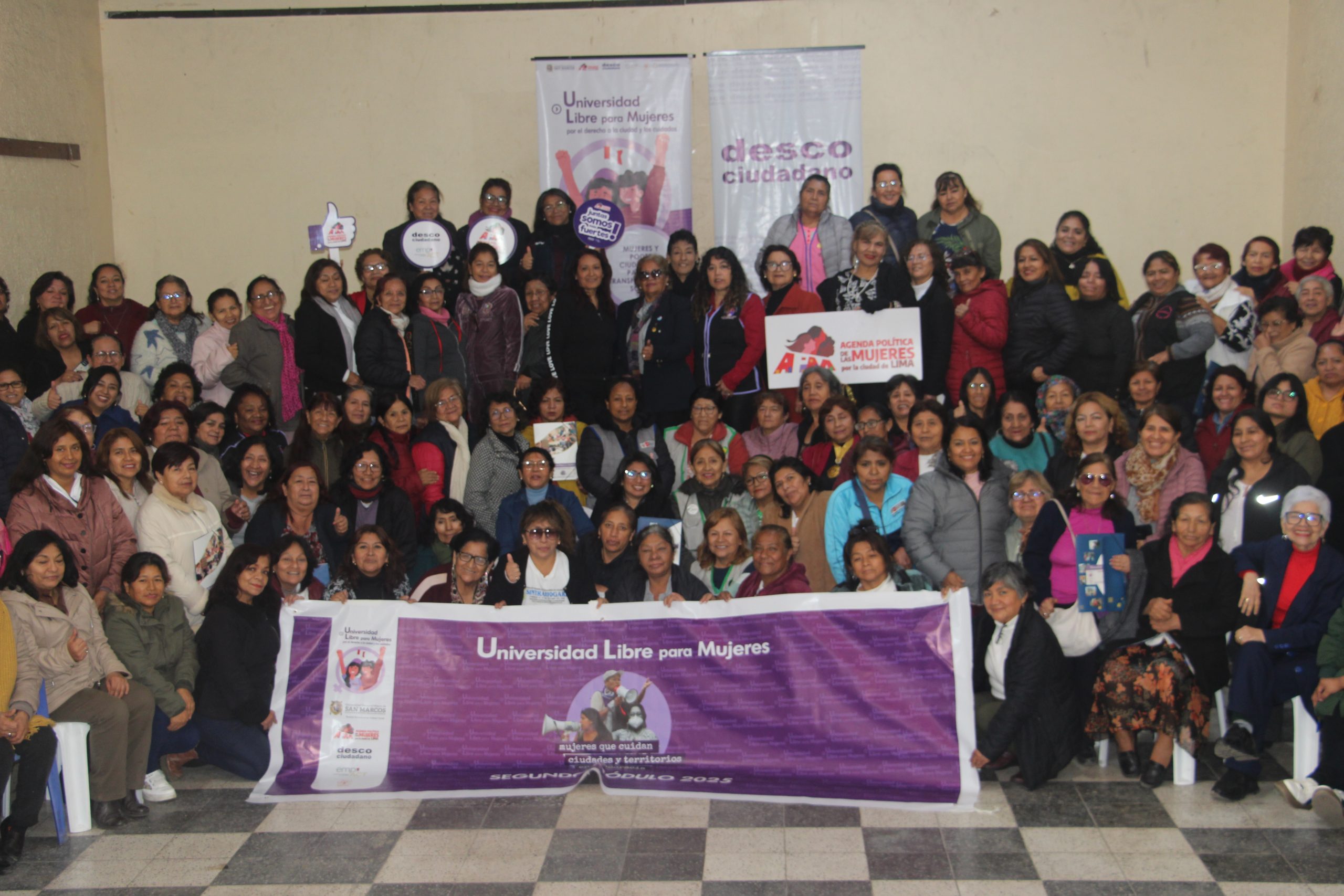
40 women’s social and community organizations in Metropolitan Lima (South, North, East, and Central Lima)
Emplacement (communauté / Ville)
Province / état
Pays
Population participante
40 women’s social and community organizations in Metropolitan Lima (South, North, East, and Central Lima).
Description de la pratique
Brève description quantitative et qualitative
The development of the Women’s Political Agenda (APM) involved approximately 400 women from around 100 social organizations in Southern, Northern, Central, and Eastern Lima.
In 2018, following the presentation of the agendas for the districts of Southern Lima in Congress, it became clear that the organizations (currently participating in the APM) were calling for training programs. Training sessions and advocacy activities focused on developing the APM through in-person sessions between October and November 2019 and continued from January to March 2020, prior to the COVID-19 pandemic. In total, four parallel processes were carried out, one for each zone of Lima. Due to the pandemic, activities were adapted to an online format: in April and May 2020, communication workshops were held, and subsequently, between May and July of the same year, thematic working groups were organized according to each of the APM’s focus areas. Currently, these processes have been sustained annually and on an ongoing basis, in response to the country’s political context.
This process recognizes four types of participating organizations: grassroots social organizations (Mothers’ Clubs, “Vaso de Leche”, and community kitchens), labor unions, identity-based organizations, and thematic organizations.
Pertinence pour l'habitat et les droits de l’Homme
The Women’s Political Agenda highlights the inequalities women face in accessing and using urban space in Lima, particularly regarding safety, services, and opportunities. It also strengthens the coordination and advocacy efforts of women’s social organizations to participate in public decision-making and defend their rights in urban spaces.
Domaines thématiques de HIC concernés par cette Pratique
Comment cette pratique se rapporte-t-elle aux domaines thématiques de HIC ?
The Women’s Political Agenda relates to HIC’s gender approach, as it strengthens the leadership of women in social organizations to influence urban public policy. Furthermore, it promotes gender as a cross-cutting issue in the field of habitat, defending women’s rights to a more just city that is accessible and free from discrimination.
Contexte et approche : quel défi a-t-il abordé et comment ?
The challenge identified is the erosion of spaces for women’s participation and representation in a context of political crisis and rising violence. The Women’s Political Agenda seeks to foster spaces for dialogue, coordination, and citizen oversight to strengthen the participation of women leaders and promote monitoring of public administration. Additionally, coordination with young women’s organizations is identified as a challenge. Through the Women’s Political Agenda, spaces for dialogue have been established, but it is essential to consolidate relationships and move toward a solid alliance that enables the coordination of actions and a joint struggle.
Résultats essentiels et leçons apprises
Results and Lessons Learned
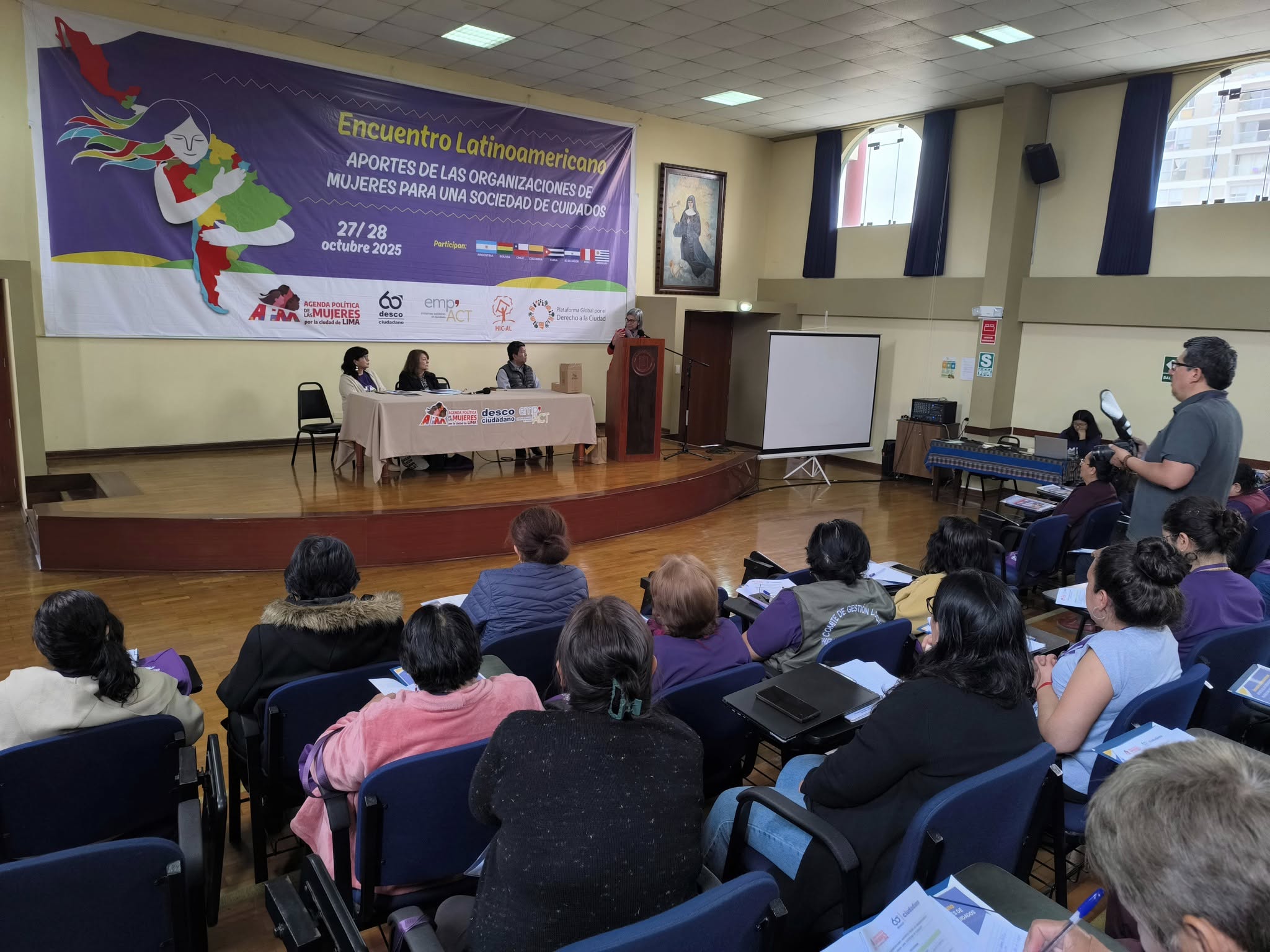
Results: Two Latin American meetings on the right to the city with women’s organizations (Red Mujer y Hábitat, HIC): The first meeting took place from May 31 to June 2, 2022; the second meeting was held from October 28 to 30, 2025.
In 2023, advocacy efforts were carried out for the submission and approval of the “Establishment of a Temporary Shelter for Women Victims of Violence in the District of San Juan de Miraflores (SJM)”
Lessons: Training sessions and advocacy activities raise awareness about women’s circumstances. The role of NGOs should be complementary and serve as an intermediary between authorities and organizations.
Médias et Ressources
Témoignage / citation
“Unity is the only way to make the APM’s demands visible so that we can achieve results and receive responses from the authorities for the benefit of women. It’s not just about coming together, but about becoming stronger—not just focusing on North, South, East, and Central Lima, but on all of Lima—and asking ourselves: ‘What can we do together?’ and thus influence more sectors of local, regional, and central government.” —Bertha Jáuregui. Legal Advocates of Villa El Salvador, Lima.
“As we have done for many years within our organizations, it is important to hold protests that present concrete proposals. It’s not enough just to have a document; the authorities must also know their responsibilities and areas of jurisdiction, and the public must also know their rights and duties. Thus, the APM document brings together experiences and perspectives that unite us women in developing fair proposals for the city of Lima.” —Adelinda Díaz. National Union of Domestic Workers of Peru, Lima.
Message aux jeunes générations
Coordination with other organizations is necessary, especially to involve young people and raise awareness of the issues articulated in the Women’s Political Agenda. One idea is to organize exchange programs with young people as an opportunity to pass on the identity, knowledge, and experience of older women leaders. This is essential for motivating their participation and encouraging their involvement in our struggles. In this way, we could strengthen and empower the next generation of women leaders who will continue building a city for everyone.
Documents / Vidéos
Informations sur l'organisation
Nom de l'organisation
Pays
Région
Année de création de l'organisation
Site Web / Réseaux Sociaux
Photos