24 Juin 2016 | News & Articles
These Guidelines are a new international instrument that can be used by peasant, fishing and pastoralist organisations, indigenous peoples, the landless, women and youth, and civil society as a whole, to assert their rights.
24 Juin 2016 | News & Articles
Ce Manuel Populaire est nouvel instrument international qui vise à faciliter la compréhension des Directives et à offrir une orientation pratique concernant les modalités selon lesquelles ces organisations peuvent les utiliser dans leurs luttes

22 Juin 2016
Habitat II was held in Istanbul in 1996 wit the objective to adopt general principles and commitments, and formulate a global plan for action capable of guiding national and internationa efforts over the next twenty years. As we are approaching Habitat III, and the adoption of a « New Urban Agenda, » it is essential to first understand to what degree national governemnts have managed to fulfill their Habitat II commitments.
21 Juin 2016
Lorena Zárate, HIC’s president, will participate in the panel 1: « Public Sector and Civil Society’s contributions »
15 Juin 2016 | News & Articles
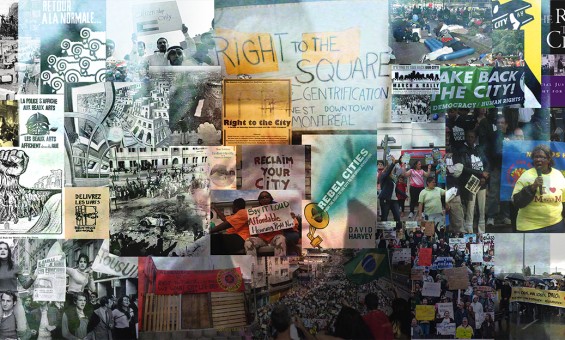
In the last decade, the right to the city has evolved as a powerful rallying cry in the struggle against the exclusionary processes of globalization and the commodification of urban space, and in conflicts over who has claim to the city and what kind of city it should be. Drawing on the work of Henri Lefebvre the vision of the right to the city has inspired a global social movement, legislative reform in Latin America, and international debates (eg: at WUF5 in Rio). Nevertheless, its content remains elusive and implementation is fraught with challenges. This paper critically examines the right to the city debate, and argues for a redefinition of the role of the local state and social actors in implementing the rights-based agenda that the right to city entails.