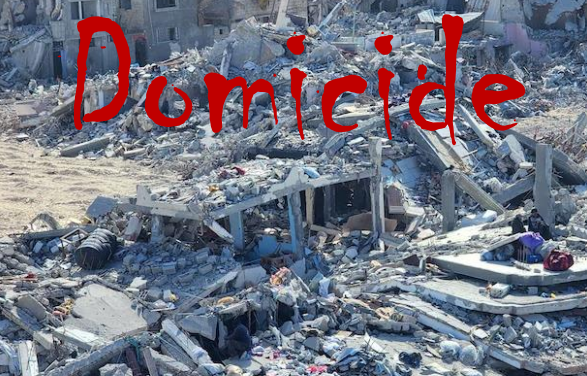
The annual report 2026 from the HIC-HLRN Violation Database is out: Domicide
The annual World Habitat Day / Urban October report 2026 from the HLRN Violation Database documents the practice of “domicide” — the deliberate, systematic destruction of homes and habitat. Drawing [...]

Des communautés aux instances internationales : l’action de HIC en faveur du droit au logement
Comment les communautés organisées peuvent-elles faire entendre leur voix dans les instances décisionnelles internationales ? Dans cette vidéo, Guillermo Marzioni, vice-président de la HIC, explique comment la Coalition internationale pour [...]

Les Nations Unies en crise : rétablir le consensus sur les droits de l’homme et le droit international
Notre organisation Adhérent, l’Observatori DESCA, a organisé cette conférence afin d’aborder un sujet qui préoccupe de nombreux défenseurs des droits de l’homme liés au logement et à la justice sociale [...]

Expulsions forcées : les conséquences humaines, la lutte pour les droits et la résistance collective – L’histoire d’El Jardín | Medellín, Colombie
Expulsions forcées : l’impact humain, la lutte pour les droits et la résistance collective Dans le cadre de la campagne collective #StopForcedEvictions, HIC et ses organisations partenaires partagent des témoignages [...]
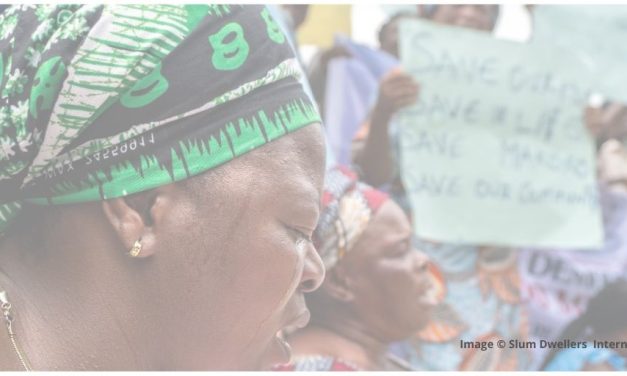
Makoko, Lagos, Nigeria | Expulsions forcées et lutte pour le droit de rester sur place
Expulsions forcées : l’impact humain, la résistance communautaire et le pouvoir du récit Dans le cadre de la campagne collective #StopForcedEvictions, HIC et ses organisations partenaires partagent des témoignages qui [...]
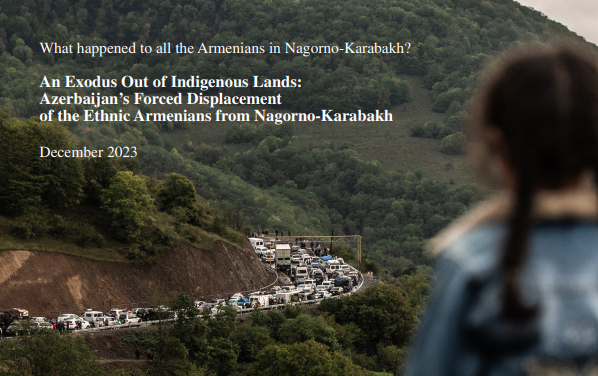
La population arménienne du Haut-Karabakh | Déplacements forcés et lutte pour la justice
Déplacement forcé : les conséquences humaines, la lutte pour les droits et l’exigence de réparation Dans le cadre de la campagne collective #StopForcedEvictions, HIC et ses organisations partenaires partagent des [...]

À noter dans vos agendas : Espace régional d’apprentissage collaboratif sur le logement, la terre et les moyens de subsistance des femmes en Afrique subsaharienne
En collaboration avec Rooftops Canada et les partenaires du Women Spaces Project, nous vous invitons chaleureusement à participer à un « Espace régional d’apprentissage collaboratif » en ligne, en quatre [...]
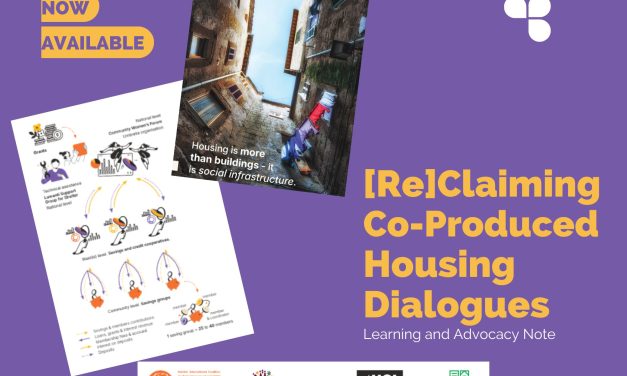
Maintenant disponible : Note d’apprentissage et de plaidoyer : « Reprendre possession du logement coproduit en Europe »
Nous sommes ravis de vous annoncer que la Note d’apprentissage et de plaidoyer résumant les [Re]claiming Co-Produced Housing Dialogues est désormais disponible en ligne en anglais, français et espagnol. Téléchargez [...]
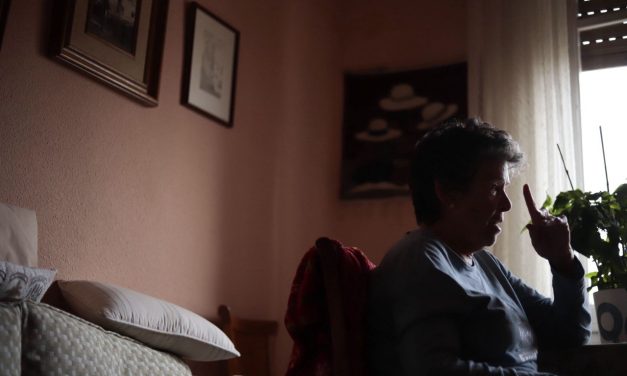
Le cas de Maricarmen : une expulsion forcée et l’incapacité des institutions espagnoles à prévenir et à remédier à une violation des droits de l’homme
Image © Observatori DESCA L’histoire de Maricarmen | Espagne : les expulsions forcées constituent des violations flagrantes des droits de l’homme qui peuvent être évitées. Les conséquences humaines, la lutte [...]
Déclaration de la Présidence à l’occasion de la Journée mondiale de l’habitat – Sécuriser le logement, garantir les droits : appel à l’action contre les expulsions forcées
À l’occasion de la commémoration de la Journée mondiale de l’habitat 2026, Habitat International Coalition (HIC) réaffirme son engagement en faveur de la défense des droits fondamentaux de l’Homme, y [...]
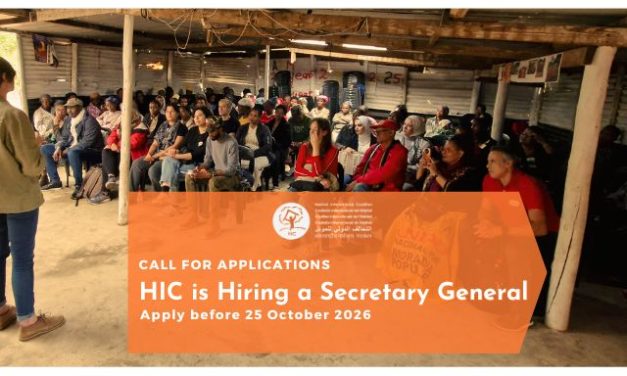
Nous recrutons : HIC recherche un-e Secrétaire Général-e
Habitat International Coalition (HIC) recherche un-e nouveau/nouvelle Secrétaire Général-e pour diriger son Secrétariat Général et coordonner son action interrégionale en défense du droit humain à l'habitat et à un logement [...]
À vos agendas, 8 octobre : Lancement en ligne de la Déclaration sur les priorités communes de la Convergence des mouvements sociaux de HIC
Rejoignez-nous le 8 octobre 2026, de 16 h à 17 h 30 (heure d'Afrique du Sud, SAST), pour le lancement en ligne de la Déclaration sur les priorités communes de [...]

- 1
- ...
- 2
- 3
- 4
- 5
- 6
- 7
- 8
- 9
- 10
- 11
- 12
- 13
- 14
- 15
- 16
- 17
- 18
- 19
- 20
- 21
- 22
- 23
- 24
- 25
- 26
- 27
- 28
- 29
- 30
- 31
- 32
- 33
- 34
- 35
- 36
- 37
- 38
- 39
- 40
- 41
- 42
- 43
- 44
- 45
- 46
- 47
- 48
- 49
- 50
- 51
- 52
- 53
- 54
- 55
- 56
- 57
- 58
- 59
- 60
- 61
- 62
- 63
- 64
- 65
- 66
- 67
- 68
- 69
- 70
- 71
- 72
- 73
- 74
- 75
- 76
- 77
- 78
- 79
- 80
- 81
- 82
- 83
- 84
- 85
- 86
- 87
- 88
- 89
- 90
- 91
- 92
- 93
- 94
- 95
- 96
- 97
- 98
- 99
- 100
- 101
- 102
- 103
- 104
- 105
- 106
- 107
- 108
- 109
- 110
- 111
- 112
- 113
- 114
- 115
- 116
- 117
- 118
- 119
- 120
- 121
- 122
- 123
- 124
- 125
- 126
- 127
- 128
- 129
- 130
- 131
- 132
- 133
- 134
- 135
- 136
- 137
- 138
- 139
- 140
- 141
- 142
- 143
- 144
- 145
- 146
- 147
- 148
- 149
- 150
- 151
- 152
- 153
- 154
- 155
- 156
- 157
- 158
- 159
- 160
- 161
- 162
- 163
- 164
- 165
- 166
- 167
- 168
- 169
- 170
- 171
- 172
- 173
- 174
- 175
- 176
- 177
- 178
- 179
- 180
- 181
- 182
- 183
- 184
- 185
- 186
- 187
- 188
- 189
- 190
- 191
- 192
- 193
- 194
- 195
- 196
- 197
- 198
- 199
- 200
- 201
- 202
- 203
- 204
- 205
- 206
- 207
- 208
- 209
- 210
- 211
- 212
- 213
- 214
- 215
- 216
- 217
- 218
- 219
- 220
- 221
- 222
- 223
- 224
- 225
- 226
- 227
- 228
- 229
- 230
- 231
- 232
- 233
- 234
- 235
- 236
- 237
- 238
- 239
- 240
- 241
- 242
- 243
- 244
- 245
- 246
- 247
- 248
- 249
- 250
- 251
- 252
- 253
- 254
- 255
- 256
- 257
- 258
- 259
- 260
- 261
- 262
- 263
- 264
- 265
- 266
- 267
- 268
- 269
- 270
- 271
- 272
- 273
- 274
- 275
- 276
- 277
- 278
- 279
- 280
- 281
- 282
- 283
- 284
- 285
- 286
- 287
- 288
- 289
- 290
- 291
- 292
- 293
- 294
- 295
- 296
- 297
- 298
- 299
- 300
- 301
- 302
- 303
- 304
- 305
- 306
- 307
- 308
- 309
- 310
- 311
- 312
- 313
- 314
- 315
- 316
- 317
- 318
- 319
- 320
- ...
- 321
Base de Données sur les Violations du Droit de l’Homme au Logement
Le Réseau des Droits à la Terre et au Logement de la Coalition Internationale de l’Habitat a inauguré une nouvelle Base de Données sur les Violations du Droit de l’Homme au Logement Convenable.
New HRAH Violations Database
World Habitat Day, 3 October 2005, the Habitat International Coalition’s Housing and Land Rights Network Has Launched a New Right to Adequate Housing Violations Database
Statement for World Habitat Day 2005
Everyone’s right to a secure place where to live in peace and dignity -strategic axis of the World Campaign for the Right to Housing prompted by HIC in the 90s- reaches today greater complexity and new dimensions in advance of the serious impacts of the economic globalization and the neo-liberal policies that prompt it.
Solidarity appeal to protest UN-Habitat’s honor award to housing rights violator
Governor Sutiyoso has become infamous for his brutal and massive evictions of the houses of the urban poor and the confiscation of their means of livelihood like pedicabs and the goods and stalls of sidewalk vendors.
No award for Jakarta authorities!
We cannot understand why UN Habitat gives this award to the City of Jakarta. The leading authorities are well known as example for the miss-use of the « city without slums »-approach. Cleaning the cities from the poor by evictions, excluding street vendors etc. is not what we understand by rights-based urban development.
Evictions not the answer to challenge of world slums – Annan
With more than 3 billion people – one third of humanity – facing the prospect of living in slums by 2050 if present trends continue, Secretary-General Kofi Annan today dismissed evictions and demolitions as the answer, calling instead for pro-poor urban development.
Demand UN Habitat to withdraw the award to be given tothe city of Jakarta
The award will humiliate urban poor people of Jakarta and other cities in Indonesia. Under the leadership of Governor Sutiyoso, Jakarta has been transformed into a city of eviction and confiscation against urban poor people.
Not to proceed to give Mr Sutiyoso the award
Jakarta Metropolitan City will receive the award in behalf of the city from UN-Habitat for his achievement in « slums improving and building new infrastructure to create an inclusive, cosmopolitan city ». Although Governor Sutiyoso has a terrible record of violating the housing and livelihood rights of the urban poor of Jakarta.
2005 Right Livelihood Awards Honour Pioneers For Justice, Fair Trade And Cultural Renewal
The 2005 Honorary Right Livelihood Award goes to one of Mexico’s greatest living artists and community philanthropists, Franscisco Toledo.
Discours pour la Journée Mondiale de l’Habitat 2005
Le droit de tous à disposer d’un lieu où vivre dans la sécurité, la paix et la dignité – axe stratégique de la Campagne Mondiale pour le Droit au Logement impulsée par HIC durant les années 90- présente aujourd’hui une complexité majeure et de nouvelles dimensions face aux graves conséquences de la globalisation économique et des politiques néo-libérales sous jacentes.
UN Secretary General on the occasion of World Habitat Day 2005
‘The build-up of slums and informal settlements occurs in large part because of policies and exclusionary practices that deny public services and basic facilities – including water, sanitation, health and education – to informal settlements that are deemed illegal. Moreover, community-based efforts to redress such problems often face political and bureaucratic obstacles. But evictions and demolitions are not the answer to the challenges of rapid urbanization. We must have pro-poor, participatory urban development in which women and men are empowered to manage their communities, and where development is carried out with respect for human rights and in accordance with international law.’
Urgent Action: La Parota Dam, Mexico
TOMÁS CRUZ ZAMORA of the community of Huamuchitos, Bienes Comunales de Cacahuatepec, was murdered on 18 September by Cirilo Cruz, after participating in an Assembly of communal farmers and rural residents opposed to the construction of the Parota Dam, held in the municipality of Acapulco, Guerrero.