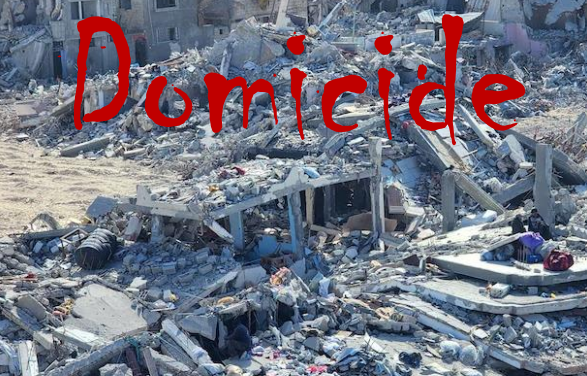
The annual report 2026 from the HIC-HLRN Violation Database is out: Domicide
The annual World Habitat Day / Urban October report 2026 from the HLRN Violation Database documents the practice of “domicide” — the deliberate, systematic destruction of homes and habitat. Drawing [...]
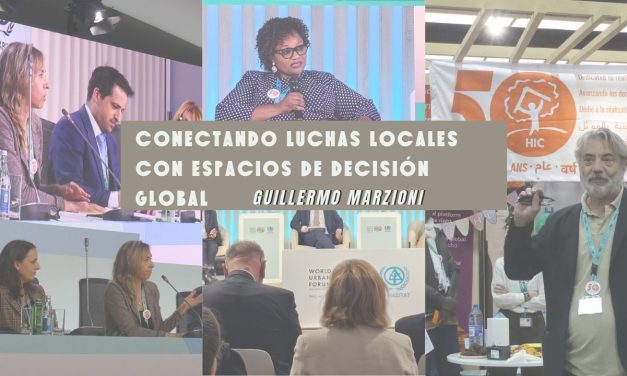
Des communautés aux instances internationales : l’action de HIC en faveur du droit au logement
Comment les communautés organisées peuvent-elles faire entendre leur voix dans les instances décisionnelles internationales ? Dans cette vidéo, Guillermo Marzioni, vice-président de la HIC, explique comment la Coalition internationale pour [...]
Les Nations Unies en crise : rétablir le consensus sur les droits de l’homme et le droit international
Notre organisation Adhérent, l’Observatori DESCA, a organisé cette conférence afin d’aborder un sujet qui préoccupe de nombreux défenseurs des droits de l’homme liés au logement et à la justice sociale [...]
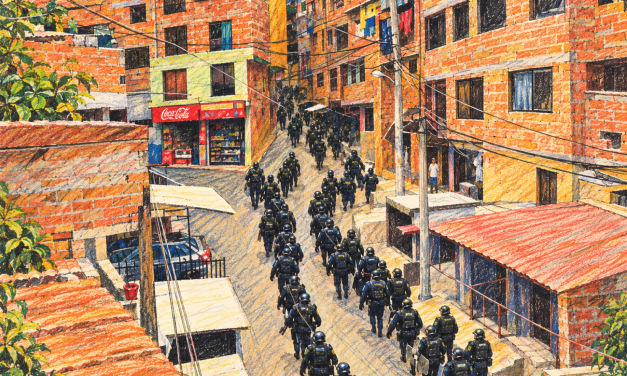
Expulsions forcées : les conséquences humaines, la lutte pour les droits et la résistance collective – L’histoire d’El Jardín | Medellín, Colombie
Expulsions forcées : l’impact humain, la lutte pour les droits et la résistance collective Dans le cadre de la campagne collective #StopForcedEvictions, HIC et ses organisations partenaires partagent des témoignages [...]
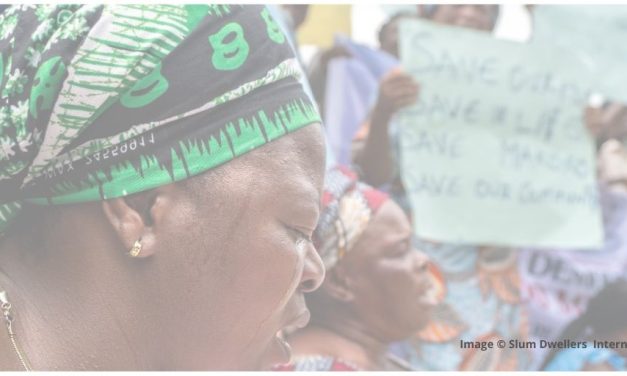
Makoko, Lagos, Nigeria | Expulsions forcées et lutte pour le droit de rester sur place
Expulsions forcées : l’impact humain, la résistance communautaire et le pouvoir du récit Dans le cadre de la campagne collective #StopForcedEvictions, HIC et ses organisations partenaires partagent des témoignages qui [...]
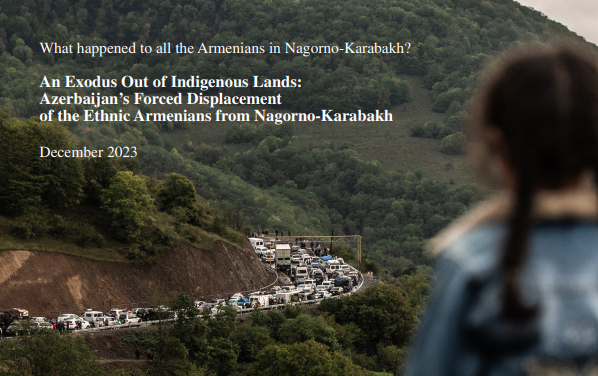
La population arménienne du Haut-Karabakh | Déplacements forcés et lutte pour la justice
Déplacement forcé : les conséquences humaines, la lutte pour les droits et l’exigence de réparation Dans le cadre de la campagne collective #StopForcedEvictions, HIC et ses organisations partenaires partagent des [...]
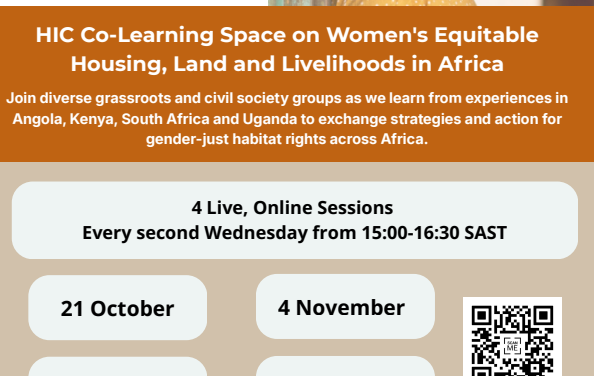
À noter dans vos agendas : Espace régional d’apprentissage collaboratif sur le logement, la terre et les moyens de subsistance des femmes en Afrique subsaharienne
En collaboration avec Rooftops Canada et les partenaires du Women Spaces Project, nous vous invitons chaleureusement à participer à un « Espace régional d’apprentissage collaboratif » en ligne, en quatre [...]
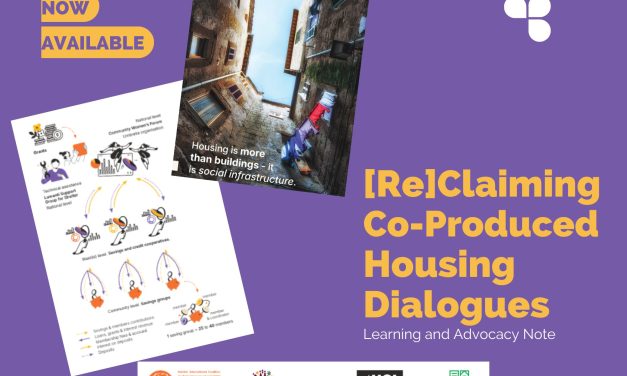
Maintenant disponible : Note d’apprentissage et de plaidoyer : « Reprendre possession du logement coproduit en Europe »
Nous sommes ravis de vous annoncer que la Note d’apprentissage et de plaidoyer résumant les [Re]claiming Co-Produced Housing Dialogues est désormais disponible en ligne en anglais, français et espagnol. Téléchargez [...]
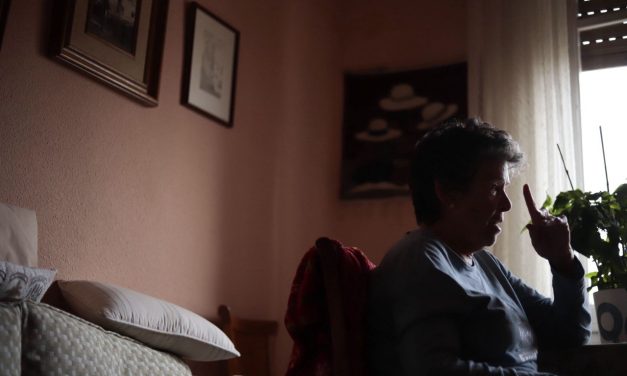
Le cas de Maricarmen : une expulsion forcée et l’incapacité des institutions espagnoles à prévenir et à remédier à une violation des droits de l’homme
Image © Observatori DESCA L’histoire de Maricarmen | Espagne : les expulsions forcées constituent des violations flagrantes des droits de l’homme qui peuvent être évitées. Les conséquences humaines, la lutte [...]
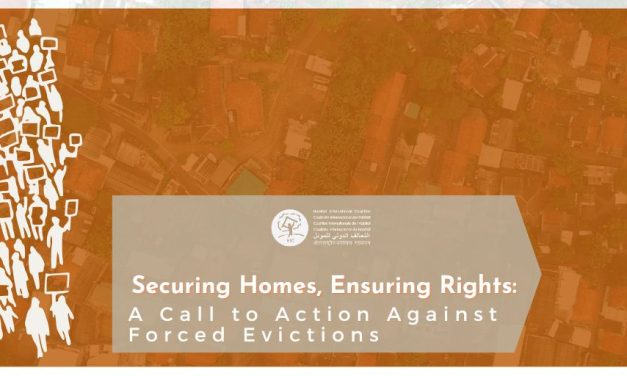
Déclaration de la Présidence à l’occasion de la Journée mondiale de l’habitat – Sécuriser le logement, garantir les droits : appel à l’action contre les expulsions forcées
À l’occasion de la commémoration de la Journée mondiale de l’habitat 2026, Habitat International Coalition (HIC) réaffirme son engagement en faveur de la défense des droits fondamentaux de l’Homme, y [...]
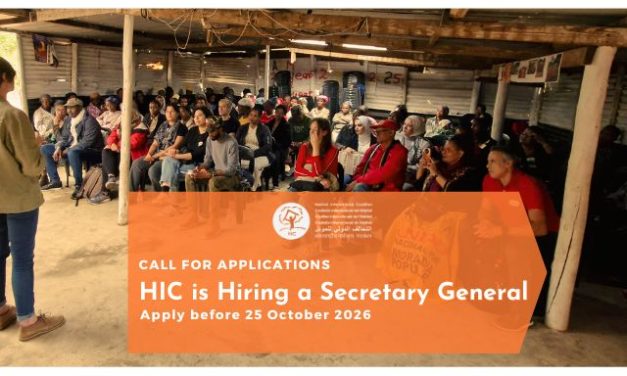
Nous recrutons : HIC recherche un-e Secrétaire Général-e
Habitat International Coalition (HIC) recherche un-e nouveau/nouvelle Secrétaire Général-e pour diriger son Secrétariat Général et coordonner son action interrégionale en défense du droit humain à l'habitat et à un logement [...]
À vos agendas, 8 octobre : Lancement en ligne de la Déclaration sur les priorités communes de la Convergence des mouvements sociaux de HIC
Rejoignez-nous le 8 octobre 2026, de 16 h à 17 h 30 (heure d'Afrique du Sud, SAST), pour le lancement en ligne de la Déclaration sur les priorités communes de [...]

- 1
- ...
- 2
- 3
- 4
- 5
- 6
- 7
- 8
- 9
- 10
- 11
- 12
- 13
- 14
- 15
- 16
- 17
- 18
- 19
- 20
- 21
- 22
- 23
- 24
- 25
- 26
- 27
- 28
- 29
- 30
- 31
- 32
- 33
- 34
- 35
- 36
- 37
- 38
- 39
- 40
- 41
- 42
- 43
- 44
- 45
- 46
- 47
- 48
- 49
- 50
- 51
- 52
- 53
- 54
- 55
- 56
- 57
- 58
- 59
- 60
- 61
- 62
- 63
- 64
- 65
- 66
- 67
- 68
- 69
- 70
- 71
- 72
- 73
- 74
- 75
- 76
- 77
- 78
- 79
- 80
- 81
- 82
- 83
- 84
- 85
- 86
- 87
- 88
- 89
- 90
- 91
- 92
- 93
- 94
- 95
- 96
- 97
- 98
- 99
- 100
- 101
- 102
- 103
- 104
- 105
- 106
- 107
- 108
- 109
- 110
- 111
- 112
- 113
- 114
- 115
- 116
- 117
- 118
- 119
- 120
- 121
- 122
- 123
- 124
- 125
- 126
- 127
- 128
- 129
- 130
- 131
- 132
- 133
- 134
- 135
- 136
- 137
- 138
- 139
- 140
- 141
- 142
- 143
- 144
- 145
- 146
- 147
- 148
- 149
- 150
- 151
- 152
- 153
- 154
- 155
- 156
- 157
- 158
- 159
- 160
- 161
- 162
- 163
- 164
- 165
- 166
- 167
- 168
- 169
- 170
- 171
- 172
- 173
- 174
- 175
- 176
- 177
- 178
- 179
- 180
- 181
- 182
- 183
- 184
- 185
- 186
- 187
- 188
- 189
- 190
- 191
- 192
- 193
- 194
- 195
- 196
- 197
- 198
- 199
- 200
- 201
- 202
- 203
- 204
- 205
- 206
- 207
- 208
- 209
- 210
- 211
- 212
- 213
- 214
- 215
- 216
- 217
- 218
- 219
- 220
- 221
- 222
- 223
- 224
- 225
- 226
- 227
- 228
- 229
- 230
- 231
- 232
- 233
- 234
- 235
- 236
- 237
- 238
- 239
- 240
- 241
- 242
- 243
- 244
- 245
- 246
- 247
- 248
- 249
- 250
- 251
- 252
- 253
- 254
- 255
- 256
- 257
- 258
- 259
- 260
- 261
- 262
- 263
- 264
- 265
- 266
- 267
- 268
- 269
- 270
- 271
- 272
- 273
- 274
- 275
- 276
- 277
- 278
- 279
- 280
- 281
- 282
- 283
- 284
- 285
- 286
- 287
- 288
- 289
- 290
- 291
- 292
- 293
- 294
- 295
- 296
- 297
- 298
- 299
- 300
- 301
- 302
- 303
- 304
- 305
- 306
- 307
- 308
- 309
- 310
- 311
- 312
- 313
- 314
- 315
- 316
- 317
- 318
- 319
- 320
- ...
- 321
Mexican Organisations for the Right to Water
The below signing organizations have decided to work on a shared basis in the context imposed by the IV World Water Forum to be held on March 2006, an event that articulates the interests of huge multinational enterprises and multilateral banks. On such occasion, we want to put on the water policy debate a social, cultural and spiritual perspective, in order to take into account the human right to water and its democratic, sustainable and fair management as a vital element, a view that inspires the following statement:
Sixth World Parlamentarian Forum
Parliamentarians representing the five continents, presents the following declaration at the end of the sessions of 26 and 27 January 2006 in Caracas, Venezuela. The declaration includes references to land issues.
Human Rights groups demand urgent adoption of measures to address homelessness in Delhi
As we find ourselves in the midst of a particularly severe winter – January 8, 2006 witnessed the lowest temperature recorded in Delhi since 1935 – the need for decisive action to ease the suffering of Delhi’s homeless has never been more acute. This sense of urgency, tragically, has remained conspicuously absent from the response of the city’s relevant municipal authorities.
Istanbul: ‘Self-service’ production of built environment: End of the model ?
Orhan Esen deals with recent processes which replace the specific Istanbul model of informal “SELF SERVICE URBANIZATION” by neo-liberal, globalized and formalized investments. For better understanding Orhan gives a brief sketch on main periods and elements of the urbanization processes since 1945.
Effectees stages sit-in outside City Council Hall
KARACHI: A large number of communities displaced from their houses because of the construction of Lyari Expressway, staged a sit-in in front of the City Council Hall (KMC old building) on Thursday 19 January 2006.
USA Tenants Fight to Save Social Housing
In the USA, unregulated markets and government policies to undermine social housing are aggravating a chronic problem of homelessness.
H.I.C. dans le Forum Social à Bamako, Mali
Le droit au logement, le droit à la terre, le droit à la ville et tout spécialement le droit d’accès des femmes à la terre et au logement, voilà les thèmes qui nous rapprochent dans les débats du Forum. De tous ces évènements au Forum ont surgi des messages. Entre autres: Que les banques baissent leur taux d’intérêt pour le logement et pour les micro-crédits de production! Qu’une nouvelle lecture de la Charia et une révision des lois facilitent aux femmes l’accès à la terre et au logement! Que le droit à la ville n’oublie pas les demandes des paysans! Que le Programme « Villes sans Bidonvilles » de la Banque Mondiale respecte les droits à l’habitat de tous et de toutes (au nom des Villes sans Bidonvilles, beaucoup d’institutions locales sont en train de « nettoyer » les quartiers informels qui « polluent » le développement de grands projets fonciers et immobiliers).
Aceh reconstruction is mainly physical, civil rights stiil oppressed
200 banners belong to Udeep Beusaree Network and UPLINK were discarded by Military Officers.
Today, 26 Desember 2005, all of those involved in Aceh and Nias reconstruction projects should have felt relieved with the progress they have been doing for almost a year. And in fact, President Susilo Bambang Yudhoyono comes to Aceh to witness all the progress government claimed as its achievement for Acehnese. But, on the same day, with our
own eyes, we are witnessing that all those achievements are superficial. Instead of allowing Acehnese to reclaim their civil rights which was wiped out for years during the military operations, Indonesian government shows its willingness to put an end to civil freedom by discarding our 200 banners spread out in Banda Aceh and Aceh Besar.
Tsunami : les conditions de vie et d’habitat affectées par les retards de reconstruction
Un an après le tsunami qui a ravagé l’Asie du Sud et du Sud-Est, deux responsables des Nations Unies constatent que les conditions d’habitat et de vie des victimes survivantes restent inadéquates.
Relief and rehabilitation efforts remain problematic one year after Asian Tsunami, say UN experts
One year after the Indian Ocean tsunami wreaked havoc on the lives and livelihoods of hundreds of thousands of people across several countries, relief and rehabilitation efforts, regrettably, continue to prove inadequate. Large numbers of survivors remain forced to live in sub-standard conditions that fail to meet criteria for adequate housing and living conditions dictated by international human rights standards. The lack of attention given to the high number of internally displaced persons in affected countries is also a cause of concern. A majority of individuals are still living in temporary shelters, while many remain mired in unacceptably rudimentary conditions akin to the emergency relief camps that were set up in the immediate aftermath of the disaster. Still others are forced to reside in damaged homes due to the lack of available or suitable alternatives. Living conditions in most areas are poor, and many people still do not have access to basic services like water, sanitation and healthcare.
Evacuation d’un immeuble taudis abritant 232 personnes à Saint Denis mercredi matin
Le 96 98 Bd Anatole France, immeuble taudis occupé par 232 personnes, essentiellement des Ivoiriens, 148 adultes et 51 enfants devrait être évacué à partir de demain matin dans la matinée. Compte tenu de l’incertitude sur le relogement définitif des personnes et familles hébergées, et de l’absence de relogement pour les sans papier qui sont jetés à la rue dans le froid et la très grande précarité en plein hiver, le DAL a refusé de signer le protocole proposé par l’Etat. Nous appelons à poursuivre la lutte jusqu’au relogement définitif de tous les évacués de cet immeuble taudis.
NGO Background Paper for the 2006 CSD review session
There is no MDG explicitly on energy, yet energy is essential for achieving all the goals set by the world’s leaders. Most notably, the importance of energy in meeting the goal of halving poverty by 2015 was reflected in a key decision at the Ninth Session of the Commission on Sustainable Development: “To implement the goal accepted by the international community to halve the proportion of people living on less than one dollar per day by 2015, access to affordable energy services is a prerequisite.” This underscores the need to expand greatly the availability of energy services for the poor.
WEHAB Paper, Johannesburg WSSD 2002.