
Canada. Roundtable on Canadian Participation to Habitat III
Lorena Zárate, HIC’s president, will participate in the panel 1: “Public Sector and Civil Society’s contributions”

Lorena Zárate, HIC’s president, will participate in the panel 1: “Public Sector and Civil Society’s contributions”
SSE should therefore be considered as a strategic urban policy of the Implementation plan for the New Agenda to achieve an effective implementation of Urban Paradigm Shift.
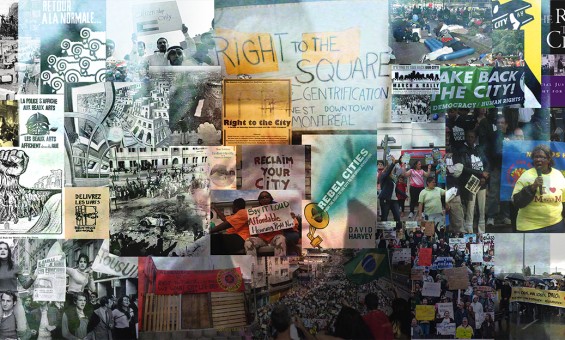
In the last decade, the right to the city has evolved as a powerful rallying cry in the struggle against the exclusionary processes of globalization and the commodification of urban space, and in conflicts over who has claim to the city and what kind of city it should be. Drawing on the work of Henri Lefebvre the vision of the right to the city has inspired a global social movement, legislative reform in Latin America, and international debates (eg: at WUF5 in Rio). Nevertheless, its content remains elusive and implementation is fraught with challenges. This paper critically examines the right to the city debate, and argues for a redefinition of the role of the local state and social actors in implementing the rights-based agenda that the right to city entails.
The document attempts to provide a clear and easy understanding of the right to the city in view of enriching the drafting process of the New Agenda.
In views of the Habitat III informal hearings hold in New York last 6-7 June, Habitat International Coalition (HIC), the International Alliance of Inhabitants (IAI) and the Habitat Network (Habitat Netz) addressed an open letter to the different Habitat III parties, recalling the need for a substantial paradigm shift in the way we build our cities. To this end, the letter’s authors call for putting the right to housing and all Human Rights at the heart of the New Habitat Agenda, through promoting policies able to limit cities’ financialization.