
Defending the Housing Rights of Displaced Persons in Colombia


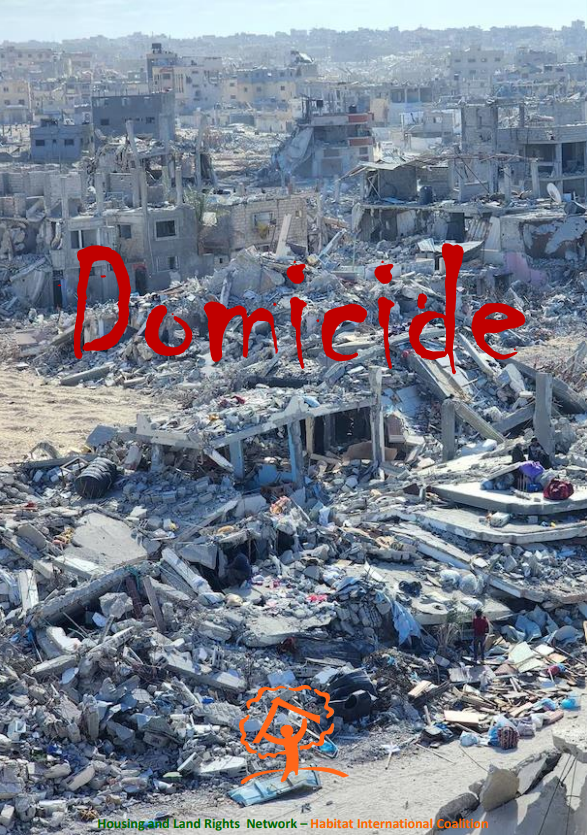
Today, roughly three million Colombians are internally displaced. As this report shows, internal displacement in Colombia has become one of the most severe humanitarian crises in the world and has profoundly discriminatory overtones. There has been no improvement of the IDPs’ situation in recent years; all too often they live in poverty, with uncertain prospects of being able to return to their original homes and lands in security and peace.


This report makes a series of recommendations to the Colombian Government. These recommendations, based on widely recognised principles of international human rights and humanitarian law, are intended to alleviate the current housing rights crisis for Colombia’s internally displaced population.


Read the report at COHRE [PDF]


The number of people internally displaced in Colombia in 2004 increased by 38.5 per cent on the previous year, according to a recent report by the national non-governmental organisation CODHES, that monitors internal displacement and human rights in the country. The report states that just over 287,000 people were displaced in 2004, compared with some 207,000 in 2003. The Colombian government has refuted these figures, insisting that internal displacement decreased by 37 per cent in 2004, with a total of 137,000 registered IDPs.


The church in Colombia has taken the same line as CODHES, pointing at a substantial increase in inter-urban displacement (which is unaccounted for in official censuses) as well as the increasing military strategy of blockading and confining communities. Ahead of the meeting on International Cooperation in Cartagena in early February 2005, convened to discuss the implementation by the Colombian government of UN human rights recommendations, Amnesty International stressed that “the human rights and humanitarian crises in Colombia remain critical with civilians targeted by all sides in the conflict – soldiers, army-backed paramilitaries and the guerrillas”. Amnesty reiterated that it will not support any demobilisation process in Colombia that does not take full account of victims’ rights to truth, justice and reparation, among other key issues at stake. It also recommended that the international community support the creation of a mechanism to monitor compliance with human rights recommendations – which, it said, the Colombian government has repeatedly failed to implement.


Read more about Internally Displaced People
Declaración del Encuentro Internacional por Ciudades Igualitarias

Declaración del Encuentro Internacional por Ciudades Igualitarias

En el marco del U20, organizaciones sociales, movimientos populares, redes de la sociedad civil, integrantes de la academia y autoridades locales comprometidas con la igualdad, los derechos humanos y la sustentabilidad se reunieron en Buenos Aires para proponer un compromiso común por Ciudades Igualitarias.
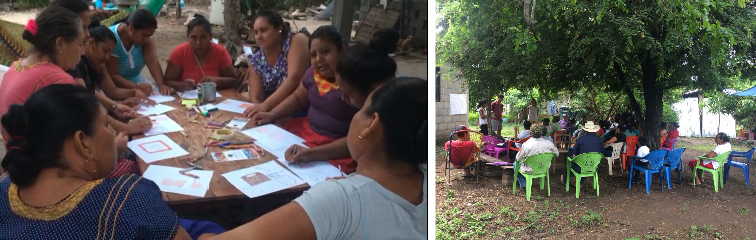
A un año de los sismos: el proyecto de Reconstrucción Integral y Social del Hábitat en el Istmo de Tehuantepec, Oaxaca

A un año de los sismos: el proyecto de Reconstrucción Integral y Social del Hábitat en el Istmo de Tehuantepec, Oaxaca

El 7 de septiembre de 2017 un sismo con magnitud de 8.2 con epicentro en Chiapas, afectó gravemente comunidades de ese estado, así como de Oaxaca. En el segundo caso, los principales daños ocurrieron en el Istmo de Tehuantepec, Ixtaltepec, Juchitan, Ixtepec y muchas de las comunidades Binnizá (Zapotecas) e Ikoot (Huaves) fueron seriamente afectadas. El 23 de septiembre del mismo año, un nuevo sismo de magnitud 6.3 con epicentro en Ixtepec agravó el problema.