Speculation and collapse : enough!
Sign the petition!

Sign the petition!
On march 26, the UN Human Rights Council approved the list of candidates for Special Procedures mandate holders proposed by the President of the Council, who chose them out of candidates proposed by the Consultative Group which the Council appointed. The list included Ms. Raquel Rolnik (Brazil), Special Rapporteur on the right to adequate housing as a component of the right to an adequate standard of living, and on the right to non-discrimination in this context
“Before the ownership society had a neat label, its creation was central to the success of the right-wing economic revolution around the world. The idea was simple: if working-class people owned a small piece of the market (…) they would cease to identify as workers and start to see themselves as owners, with the same interests as their bosses (…). Class consciousness would be a relic.
Spatial justice is the ultimate goal of many planning policies. This idea has held such way that some have even argued that planning and the search for spatial justice are equivalent . The diversity of definitions of “justice” (and of the possible “social contracts” that legitimate them), however, has meant that the political objectives of planning can be quite different and even contradictory. It has become essential therefore that the question of spatial justice be reopened and freshly debated.
The World Habitat Awards were established in 1985 by the Building and Social Housing Foundation as part of its contribution to the United Nations International Year of Shelter for the Homeless.
In this issue we examine “housing as a human right”, and what it means in the different contexts in which Habitat for Humanity works worldwide.
The Forum, Volume 14, N.4, Habitat for Humanity and Housing Rights

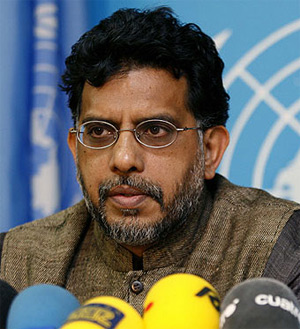
Report of the Special Rapporteur on adequate housing as a component of the right to an adequate standard of living (Miloon Kothari)
Interactive Dialogue
Miloon Kothari’s presentation in Barcelona’s seminar